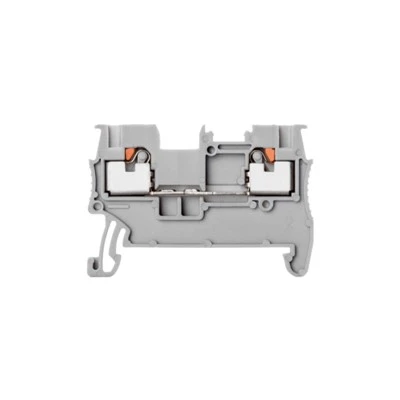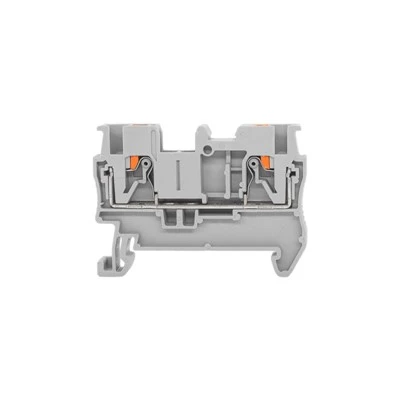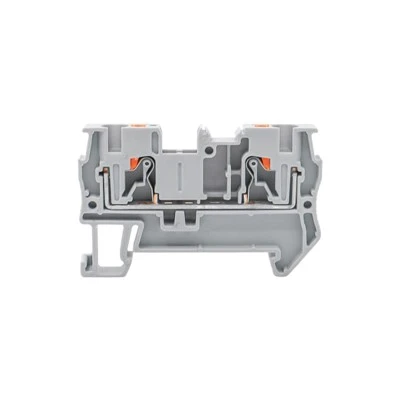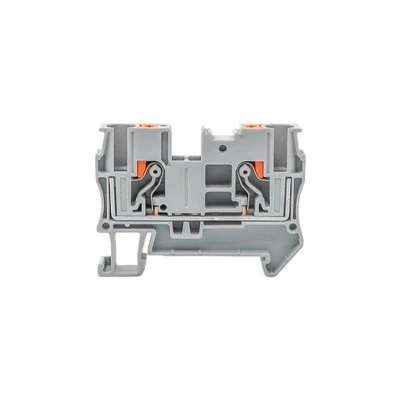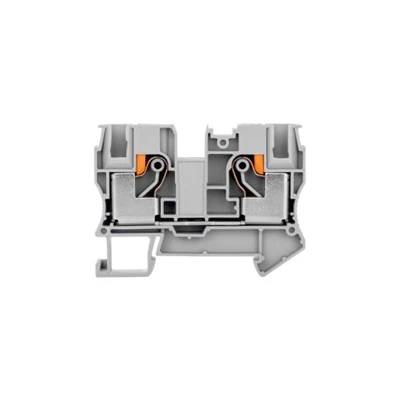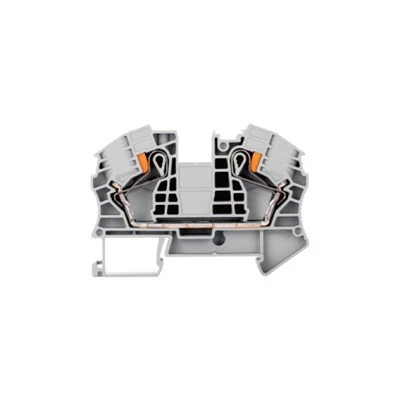
These components are primarily used in industries such as lighting, telecommunications, and security. Pluggable terminal blocks, in particular, have the widest range of applications-including variable frequency drives (VFDs), explosion-proof equipment, CNC panels, access control systems, sensors, PLCs, instrumentation, power supplies, and servo drives. Common requirements for pluggable terminals in these sectors include smooth insertion and extraction forces, low contact resistance, and durability regarding service life and fatigue resistance; consequently, the materials used for the metal contact springs must be of high quality. This necessitates that product designers possess significant experience in structural design and material selection. Barrier-style terminal blocks are mainly used in power supplies, relays (especially dual-level types), VFDs, the elevator industry (to a lesser extent), and air conditioning systems.
Terminal blocks are core components for establishing safe, reliable, and detachable connections between conductors in electrical systems. They are widely used in sectors such as industrial control, power and energy, transportation, building construction, consumer electronics, and new energy vehicles. Their primary functions include signal transmission, current distribution, circuit isolation, and facilitating ease of maintenance.
For this series of terminals, high torque is required when tightening the clamping screws, and the screw's maximum retraction distance must exceed the maximum wire-clamping range. Additionally, multi-position terminals must not exhibit warping or deformation, and the screws require high corrosion resistance.