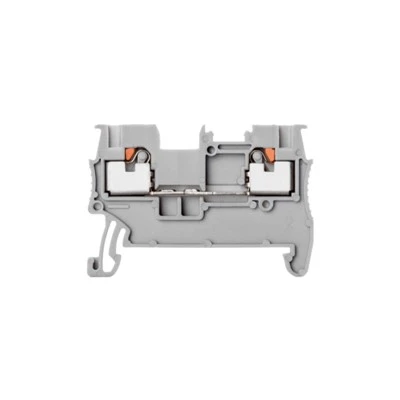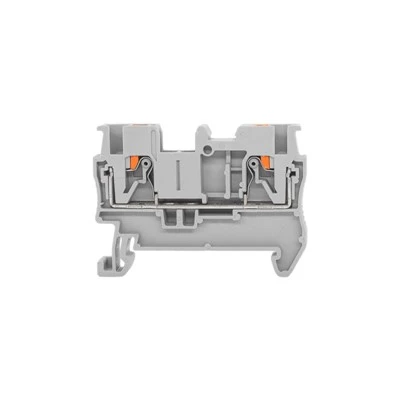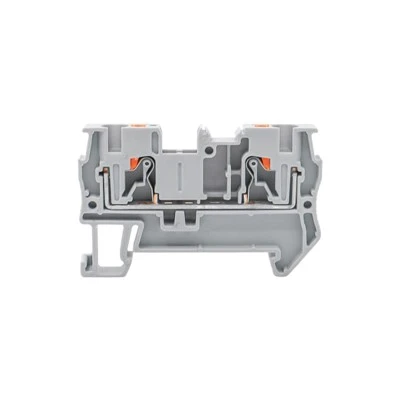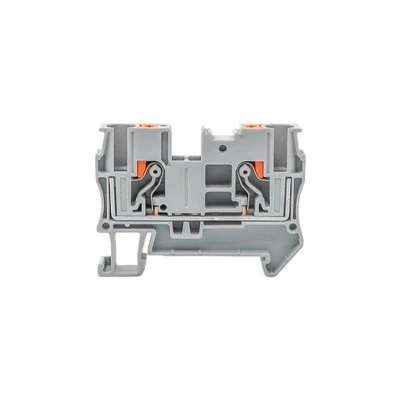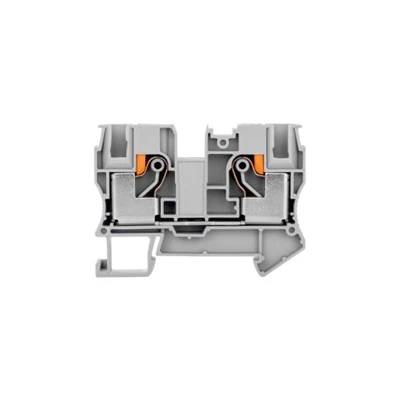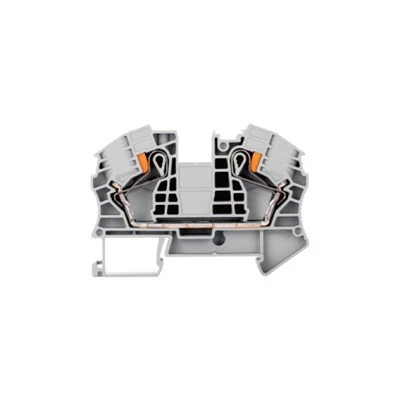
Terminal blocks are used to facilitate wire connections. Essentially, a terminal block consists of a metal component encased in insulating plastic, featuring holes at both ends for wire insertion and screws to secure or release the wires. For instance, when two wires need to be connected or disconnected intermittently, a terminal block allows for easy joining and separation without the need for soldering or twisting the wires together-offering a convenient and efficient solution.
They are also well-suited for interconnecting large numbers of wires. In the power industry, specialized terminal strips and terminal boxes are used; these feature arrays of terminal blocks in various configurations-such as single-layer or double-layer, and types designed for specific current or voltage ratings, as well as standard or disconnectable versions. A specific contact area is designed to ensure reliable electrical connection and the capacity to carry sufficient current.