


Static electricity is a common yet often underestimated phenomenon in our daily lives and industrial settings. As a supplier of metal button switches, I am frequently asked whether these components are affected by static electricity. In this blog post, I will delve into this question, exploring the science behind static electricity and its potential impact on metal button switches.
Understanding Static Electricity
Static electricity is the result of an imbalance of electric charges within or on the surface of a material. When two materials come into contact and then separate, electrons can be transferred from one material to the other. This transfer creates an excess of electrons on one material (negative charge) and a deficiency on the other (positive charge). The charges remain on the materials until they can find a path to discharge, which can occur through contact with a conductor or a sudden electrostatic discharge (ESD).
The generation of static electricity is influenced by several factors, including the materials involved, the relative humidity of the environment, and the amount of friction or contact between the materials. For example, in dry environments, the air has a lower conductivity, which allows static charges to accumulate more easily. Materials such as plastics, rubber, and synthetic fibers are particularly prone to generating static electricity due to their high electrical resistance.
How Static Electricity Can Affect Metal Button Switches
Metal button switches are used in a wide range of applications, from industrial control panels to consumer electronics. These switches typically consist of a metal button, a contact mechanism, and a terminal socket. While metal is a good conductor of electricity, metal button switches can still be affected by static electricity in several ways.
1. Electrical Leakage
Static charges can accumulate on the surface of a metal button switch. If the charge builds up to a sufficient level, it can cause electrical leakage between the switch terminals or to nearby components. This leakage can result in false signals or malfunctions, especially in sensitive electronic circuits. For example, in a control panel where precise switching is required, even a small amount of electrical leakage due to static electricity can disrupt the operation of the system.
2. Contact Damage
When a static discharge occurs near a metal button switch, the high voltage can cause damage to the switch contacts. The discharge can create a spark that melts or pits the contact surfaces, leading to increased contact resistance and reduced reliability. Over time, repeated static discharges can degrade the performance of the switch and eventually cause it to fail.
3. Component Malfunction
In addition to affecting the switch contacts, static electricity can also cause malfunctions in other components within the switch assembly. For example, if a static discharge occurs near an integrated circuit or other electronic component, it can disrupt the normal operation of the component and cause it to malfunction. This can result in system failures or downtime, which can be costly for businesses.
Mitigating the Effects of Static Electricity on Metal Button Switches
Given the potential impact of static electricity on metal button switches, it is important to take steps to mitigate these effects. Here are some strategies that can be employed:
1. Grounding
One of the most effective ways to prevent static charges from accumulating on metal button switches is to ensure proper grounding. By connecting the switch to a grounded conductor, any static charges that build up on the switch can be safely discharged to the ground. This helps to prevent electrical leakage and reduces the risk of damage to the switch contacts.
2. Anti - Static Materials
Using anti - static materials in the switch assembly can also help to reduce the generation of static electricity. For example, anti - static coatings can be applied to the switch housing or other non - metallic components to dissipate static charges more quickly. Additionally, selecting materials with lower triboelectric properties can help to minimize the generation of static electricity during normal use.
3. ESD Protection Devices
ESD protection devices, such as transient voltage suppressors (TVS) and varistors, can be incorporated into the switch circuit to protect against static discharges. These devices are designed to divert the high - voltage surge caused by an ESD event away from the sensitive components of the switch, reducing the risk of damage.
4. Environmental Control
Maintaining a controlled environment with appropriate humidity levels can also help to reduce the generation of static electricity. In areas where metal button switches are used, it is recommended to keep the relative humidity between 40% and 60%. This helps to increase the conductivity of the air, allowing static charges to dissipate more easily.
Our Metal Button Switch Products and Static Resistance
As a supplier of metal button switches, we are committed to providing high - quality products that are resistant to static electricity. Our product range includes a variety of metal button switches, such as the Mushroom Metal Button, Keylock Knob Switch, Push Button Terminal Socket, Other Push Button Switch, and Metal Flat Head Button.

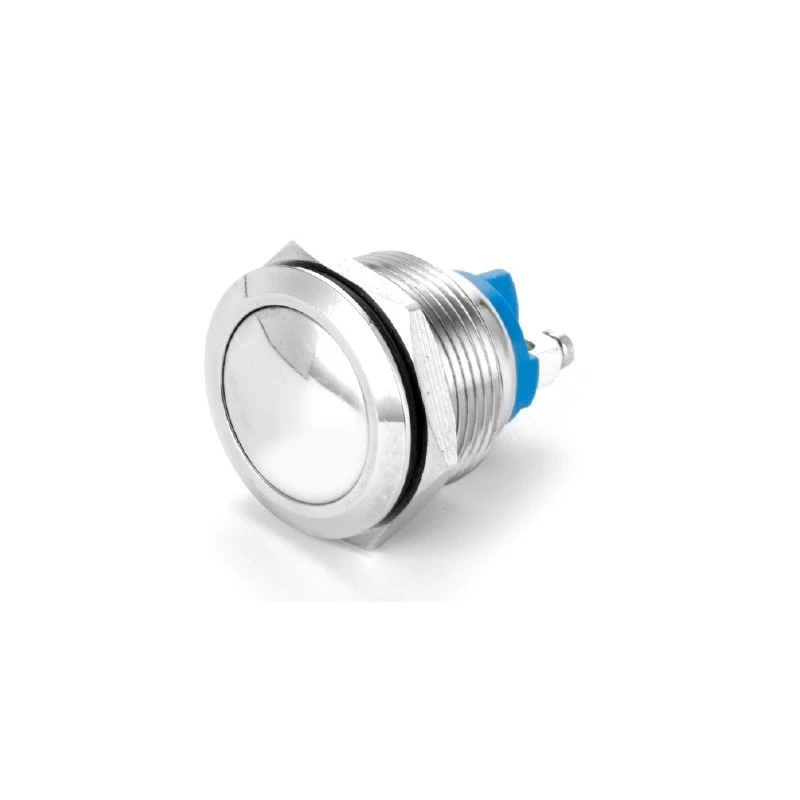
We take several measures to ensure the static resistance of our products. First, we use high - quality metals and other materials in our switch manufacturing process. These materials are carefully selected for their electrical conductivity and resistance to static charge accumulation. Second, we incorporate ESD protection devices into our switch designs to safeguard against static discharges. Finally, we conduct rigorous testing on our products to ensure that they meet or exceed industry standards for static resistance.
Conclusion
In conclusion, metal button switches can be affected by static electricity, which can lead to electrical leakage, contact damage, and component malfunctions. However, by implementing appropriate mitigation strategies, such as grounding, using anti - static materials, incorporating ESD protection devices, and controlling the environment, these effects can be minimized.
As a metal button switch supplier, we understand the importance of providing reliable and static - resistant products. Our commitment to quality and innovation ensures that our customers receive the best possible solutions for their applications. If you are in need of metal button switches or have any questions about static electricity and its impact on these components, please feel free to contact us for more information and to discuss your procurement needs.
References
- "Electrostatic Discharge Handbook for Electronic Devices and Components" by ESD Association.
- "Fundamentals of Electrical Engineering" by Alexander and Sadiku.
- Technical documentation from switch manufacturers on static resistance and protection.


