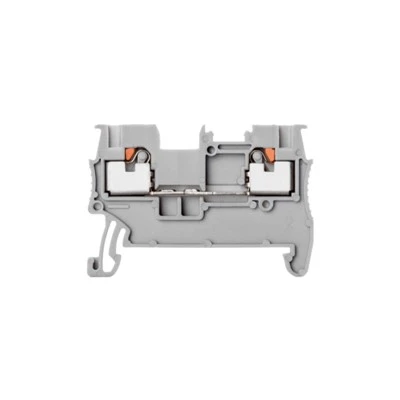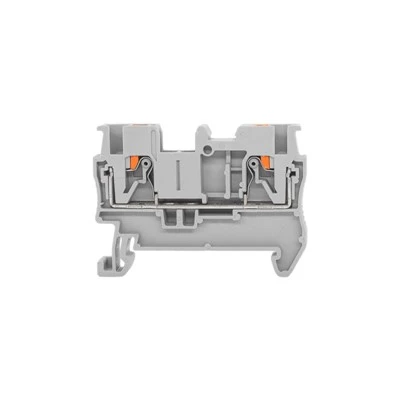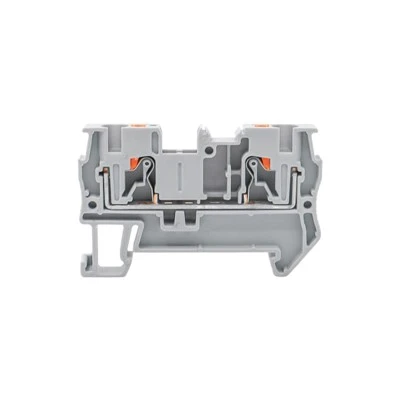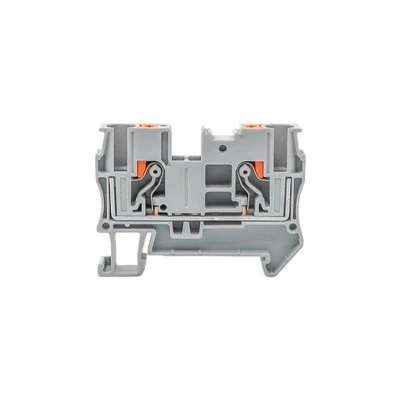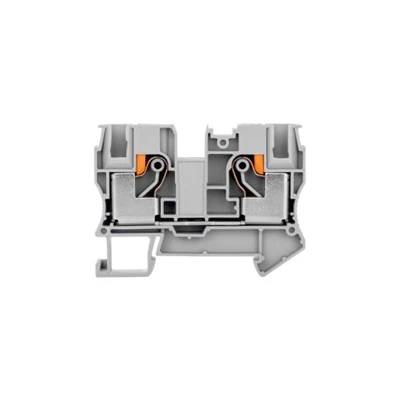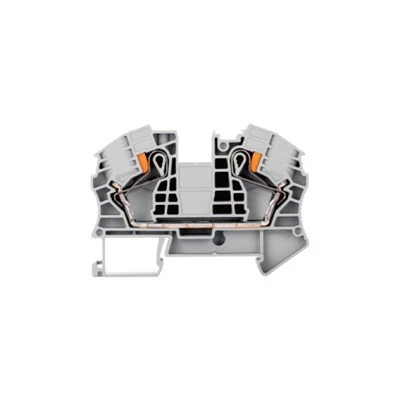
The fundamental performance characteristics of connectors can be categorized into three main areas: mechanical, electrical, and environmental. Another significant mechanical characteristic is the connector's mechanical life. Mechanical life is essentially a measure of durability-referred to as "mechanical operation" in the national standard GB5095. It is defined based on a cycle consisting of one insertion and one withdrawal, with performance-such as contact resistance-after a specified number of cycles serving as the criterion for evaluation.
Mechanical Properties: Regarding connection functionality, mating and unmating forces are critical mechanical properties. These forces are categorized into insertion force and withdrawal force (also known as separation force); requirements for each differ. Relevant standards specify maximum insertion force and minimum separation force limits. From a usage perspective, low insertion force is desirable (leading to designs such as Low Insertion Force [LIF] and Zero Insertion Force [ZIF] connectors), whereas excessively low separation force can compromise contact reliability. Mating/unmating forces and mechanical lifespan depend on contact structure (normal force magnitude), plating quality at the contact interface (coefficient of sliding friction), and the dimensional precision of contact alignment.
Electrical Properties: Key electrical properties of connectors include contact resistance, insulation resistance, and dielectric strength.
① Contact Resistance: High-quality electrical connectors should exhibit low and stable contact resistance. Values typically range from a few milliohms to several tens of milliohms.
② Insulation Resistance: A measure of insulation performance between contacts, or between contacts and the housing; values typically range from hundreds of megohms to thousands of megohms.
③ Dielectric Strength (also known as voltage withstand or dielectric withstand voltage): A measure of the connector's ability to withstand rated test voltages between contacts or between contacts and the housing.
④ Other Electrical Properties: Electromagnetic interference (EMI) leakage attenuation evaluates a connector's EMI shielding effectiveness, typically tested within the 100 MHz to 10 GHz frequency range. For RF coaxial connectors, additional electrical parameters include characteristic impedance, insertion loss, reflection coefficient, and voltage standing wave ratio (VSWR). With the advancement of digital technology, a new class of connectors-high-speed signal connectors-has emerged to handle high-speed digital pulse signals. Consequently, new electrical parameters have been introduced alongside characteristic impedance, such as crosstalk, transmission delay, and signal skew.
Environmental performance characteristics typically include resistance to temperature, humidity, and salt spray, as well as resistance to vibration and shock.
① Temperature resistance: The maximum operating temperature for connectors is generally 200°C (with the exception of a few specialized high-temperature connectors), and the minimum is -65°C. Since current flowing through contact points generates heat during operation-causing a rise in temperature-the operating temperature is generally considered to be the sum of the ambient temperature and the temperature rise at the contact points. Certain specifications explicitly define the maximum permissible temperature rise for connectors operating at their rated current.
② Humidity resistance: Moisture ingress can impair insulation performance and corrode metal components. Conditions for constant damp-heat testing involve a relative humidity of 90%–95% (up to 98%, depending on product specifications) and a temperature of +40 ± 2°C; the test duration is determined by product specifications, with a minimum of 96 hours. Cyclic damp-heat testing is even more rigorous.
③ Salt spray resistance: When connectors operate in environments containing moisture and salt, the surface finishes of metal structural parts and contacts may undergo electrochemical corrosion, affecting the connector's physical and electrical performance. Salt spray testing is mandated to evaluate a connector's ability to withstand such environments. This involves suspending the connector in a temperature-controlled test chamber and spraying a sodium chloride solution of a specified concentration using compressed air to create a salt-spray atmosphere; exposure time is defined by product specifications, with a minimum of 48 hours.
④ Vibration and shock resistance: Resistance to vibration and shock is a critical performance characteristic for electrical connectors, particularly in specialized applications such as aerospace, rail, and road transport. It serves as a key indicator for verifying the mechanical structural integrity and electrical contact reliability of the connector. Relevant test methods provide explicit requirements. Shock tests must specify peak acceleration, duration, shock pulse waveform, and the duration of any electrical continuity interruption.
⑤ Other environmental performance characteristics: Depending on application requirements, other environmental performance factors include sealing (air leakage, liquid pressure), liquid immersion (resistance to degradation from specific fluids), and low air pressure.