


In the complex landscape of electrical and electronic systems, signal junction boxes play a crucial role. As a dedicated signal junction box supplier, I often encounter various questions from customers, one of the most common being: Are there any signal demodulators in a signal junction box? To address this query comprehensively, let's delve into the functions of signal junction boxes, the nature of signal demodulators, and whether they coexist within the same unit.
Understanding Signal Junction Boxes
Signal junction boxes are fundamental components in electrical and electronic setups. Their primary function is to provide a centralized location for the connection, distribution, and management of signals. These boxes serve as a hub where multiple signal cables can be joined, split, or redirected. They are designed to ensure reliable and efficient signal transmission, protecting the connections from environmental factors such as dust, moisture, and mechanical damage.
The construction of a signal junction box typically involves a sturdy enclosure, often made of metal or high - quality plastic, which houses terminal blocks, connectors, and sometimes additional protective elements. Terminal blocks are used to secure the wires, allowing for a stable and secure connection. Connectors, on the other hand, facilitate the easy attachment and detachment of cables, enabling flexibility in system configuration and maintenance.
For instance, in industrial automation systems, signal junction boxes are used to connect sensors, actuators, and control devices. They help in organizing the complex web of wires, making the system more manageable and less prone to errors. In telecommunications, these boxes are used to distribute signals between different network components, ensuring seamless communication.
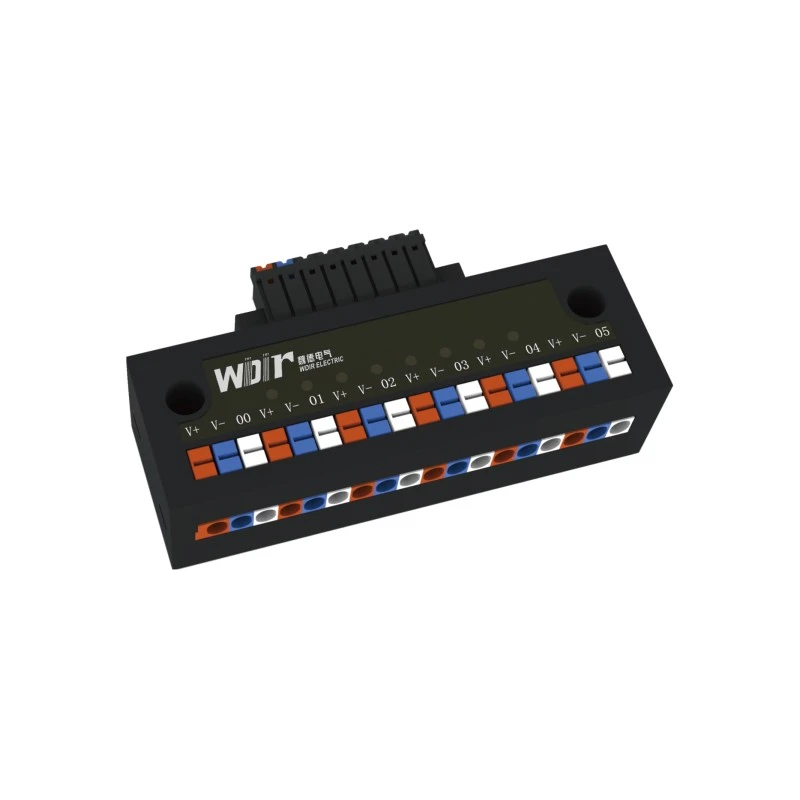

One of our popular products is the 4 Position Signal Junction Box. This box provides four connection points, making it suitable for a variety of applications where a limited number of signal connections are required. It is designed with high - quality materials to ensure long - term reliability and performance.
What are Signal Demodulators?
Signal demodulators are electronic devices used to extract the original information - carrying signal from a modulated carrier signal. In communication systems, modulation is the process of varying one or more properties of a carrier signal, such as amplitude, frequency, or phase, in accordance with the information - bearing signal. Demodulation is the reverse process, where the original information is recovered.
There are different types of signal demodulators, each corresponding to a specific modulation technique. For example, an amplitude - modulation (AM) demodulator is used to extract the audio signal from an AM radio wave. A frequency - modulation (FM) demodulator, on the other hand, recovers the audio signal from an FM radio wave.
In digital communication systems, demodulators are also used to convert the received digital signals back into their original form. For instance, in a wireless network, a demodulator is used to convert the modulated radio signals into digital data that can be processed by the computer or other devices.
Are Signal Demodulators Present in Signal Junction Boxes?
In general, traditional signal junction boxes do not come equipped with signal demodulators. The core function of a signal junction box is to manage the physical connections of signals, rather than performing signal processing tasks like demodulation.
However, in some specialized applications, there may be signal junction boxes that are integrated with demodulators. These are often custom - designed solutions for specific industries or systems where both signal connection management and demodulation are required in a single unit.
For example, in some advanced sensor networks, where the sensors transmit modulated signals, a signal junction box with a built - in demodulator can be used. This allows for the direct connection of the sensors to the junction box, which then demodulates the signals and distributes them to the appropriate monitoring or control systems. This integration can simplify the system design, reduce the number of components, and improve the overall efficiency of the system.
But it's important to note that these integrated solutions are not the norm. Most standard signal junction boxes available in the market focus solely on signal connection and distribution. If a customer requires a demodulation function, they usually need to install a separate demodulator device in the system.
Factors to Consider When Deciding on a Signal Junction Box
When choosing a signal junction box, whether you need a demodulator or not, there are several factors to consider.
1. Number of Connections
The number of signal connections required is a crucial factor. If you have a large number of sensors or devices that need to be connected, you will need a junction box with a sufficient number of terminals or connection ports. Our 4 Position Signal Junction Box is a great option for smaller - scale applications, but for larger systems, you may need a box with more positions.
2. Environmental Conditions
The environment in which the junction box will be installed also matters. If it is exposed to harsh conditions such as high humidity, extreme temperatures, or high levels of dust, you need a box with appropriate protection ratings. For example, an IP (Ingress Protection) rating can indicate the level of protection against dust and water.
3. Compatibility
Ensure that the signal junction box is compatible with the types of signals and cables you are using. Different signals may require different types of connectors and terminal blocks. For example, high - frequency signals may need special connectors to minimize signal loss.
4. Future Expansion
Consider the possibility of future expansion of the system. Choose a junction box that can accommodate additional connections if needed. This can save you the hassle and cost of replacing the box later.
Conclusion
As a signal junction box supplier, I understand the diverse needs of our customers. While traditional signal junction boxes typically do not include signal demodulators, there are specialized solutions available for specific applications where demodulation is required within the junction box.
When selecting a signal junction box, it is essential to consider factors such as the number of connections, environmental conditions, compatibility, and future expansion. Our 4 Position Signal Junction Box is an excellent option for many applications, offering reliability and ease of use.
If you are in the market for signal junction boxes or have specific requirements regarding demodulation integration, we are here to help. Our team of experts can provide you with tailored solutions to meet your unique needs. Feel free to reach out to us for further information and to start the procurement negotiation process. We look forward to serving you and contributing to the success of your projects.
References
- "Electrical Engineering Handbook," Fourth Edition, edited by Richard C. Dorf.
- "Communication Systems Engineering," Second Edition, by John G. Proakis and Masoud Salehi.


