

(1) Push-buttons should be inspected regularly to remove any accumulated dirt. Due to the small gap between contacts, the ingress of dust, oil, or emulsified fluids-often occurring after years of use or due to poor sealing-can reduce insulation resistance or even cause short circuits. In such cases, the unit must be cleaned and its insulation restored, and appropriate sealing measures should be implemented.
(2) When push-buttons are used in high-temperature environments, the plastic components are prone to deformation and aging; this can lead to the button becoming loose, potentially causing a short circuit between terminal screws. To mitigate this, a fastening ring can be installed to secure the unit, or insulating plastic sleeves can be placed over the terminal screws to prevent issues caused by loosening.
(3) For push-buttons equipped with indicator lights, the heat generated by the bulb over prolonged periods can deform the plastic lens, making bulb replacement difficult. Therefore, they are not recommended for applications requiring continuous or long-term illumination; if used in such settings, the bulb voltage can be slightly reduced to extend the bulb's service life.
(4) If poor contact is detected, the cause must be identified and addressed: if the contact surface is damaged, it can be dressed with a fine file; if there is dust, dirt, or soot on the contact surface, it should be wiped clean with a cloth dampened with solvent; if the contact spring has failed, it should be replaced; and if the contacts are severely burnt or damaged, the entire unit should be replaced.
Use And Maintenance Of Push-Button Switches
Popular Products
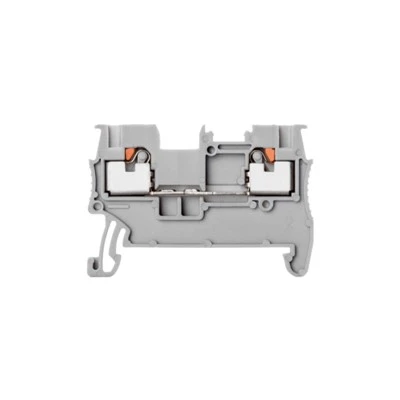
1.5 mm Terminal Block
WD6-1.5
Terminal Block adopts direct-insertion spring wiring technology, featuring space-saving design and...
Terminal Block adopts direct-insertion spring wiring technology, featuring space-saving design and...
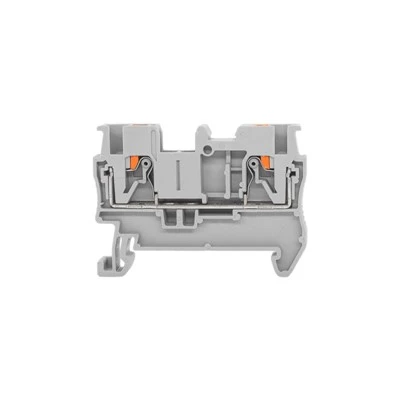
2.5mm Terminal Block
WD6-2.5
In complex electrical scenarios such as automated control cabinets and factory power distribution...
In complex electrical scenarios such as automated control cabinets and factory power distribution...
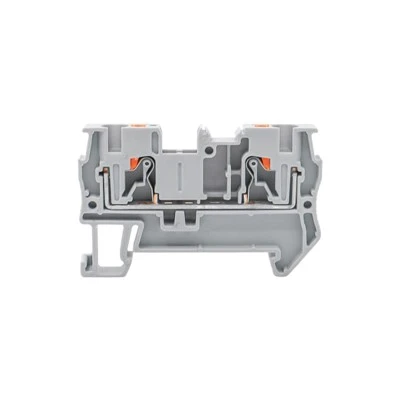
4mm Terminal Block
WD6-4
In high-security-critical scenarios such as rail transit and new energy vehicle electrical systems,...
In high-security-critical scenarios such as rail transit and new energy vehicle electrical systems,...
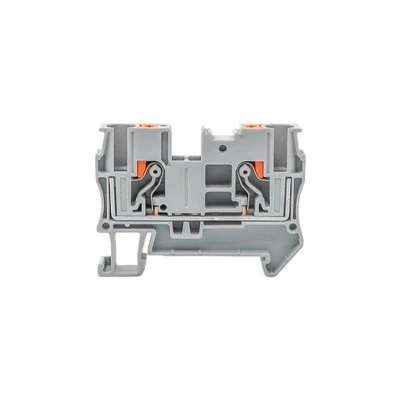
6mm Terminal Block
WD6-6
In the scenarios of civil building power distribution and smart home system wiring, WD6-6mm Terminal...
In the scenarios of civil building power distribution and smart home system wiring, WD6-6mm Terminal...
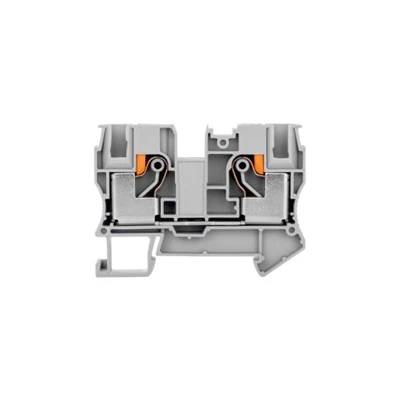
10mm Terminal Block
WD6-10
WD6-10mm Terminal blocks are essential components used to safely and efficiently connect electrical...
WD6-10mm Terminal blocks are essential components used to safely and efficiently connect electrical...
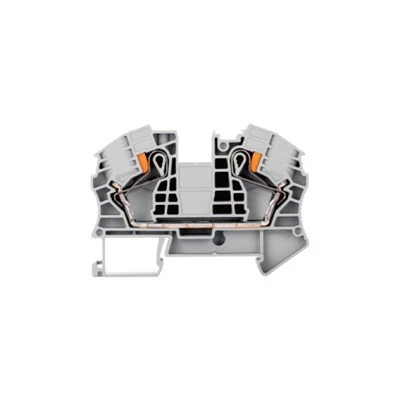
16mm Terminal Block
WD6-16
WD6-16mm terminal blocks are designed to deliver safe, reliable, and efficient electrical connections...
WD6-16mm terminal blocks are designed to deliver safe, reliable, and efficient electrical connections...